A game by Bryan Rozel · separate from BONEWATER
Sago Village
Mukah River Life & Trade. A small 3D tycoon about a Melanau sago village on a tidal river. Chop the palms, grate the pith, cook linut and biji sagu, sell at the riverside stall, and grow the village with your helpers.
Fact sheet
- Title
- Sago Village: Mukah River Life & Trade
- Developer
- Bryan Rozel (Yahujiki), independent
- Status
- Early Access, version 1.0. Updates are planned from player feedback.
- Platform
- Windows (download) and web browser, both from itch.io
- Engine
- Godot 4.8 (beta 1), low-poly 3D
- Genre
- Cosy village tycoon. No combat. Everyday village life only.
- Controls
- Mouse or keyboard to walk. Goods are picked up and dropped automatically in glowing zones.
- Checks
- 1,233 automated checks across 28 suites, all passing on 23 Oct 2026. They prove the wiring works, not that the game is fun.
- Language
- English
- Where
- yahujiki.itch.io
What you do
- Walk the village and chop sago palms for logs. Logs arrive by raft on the river as well.
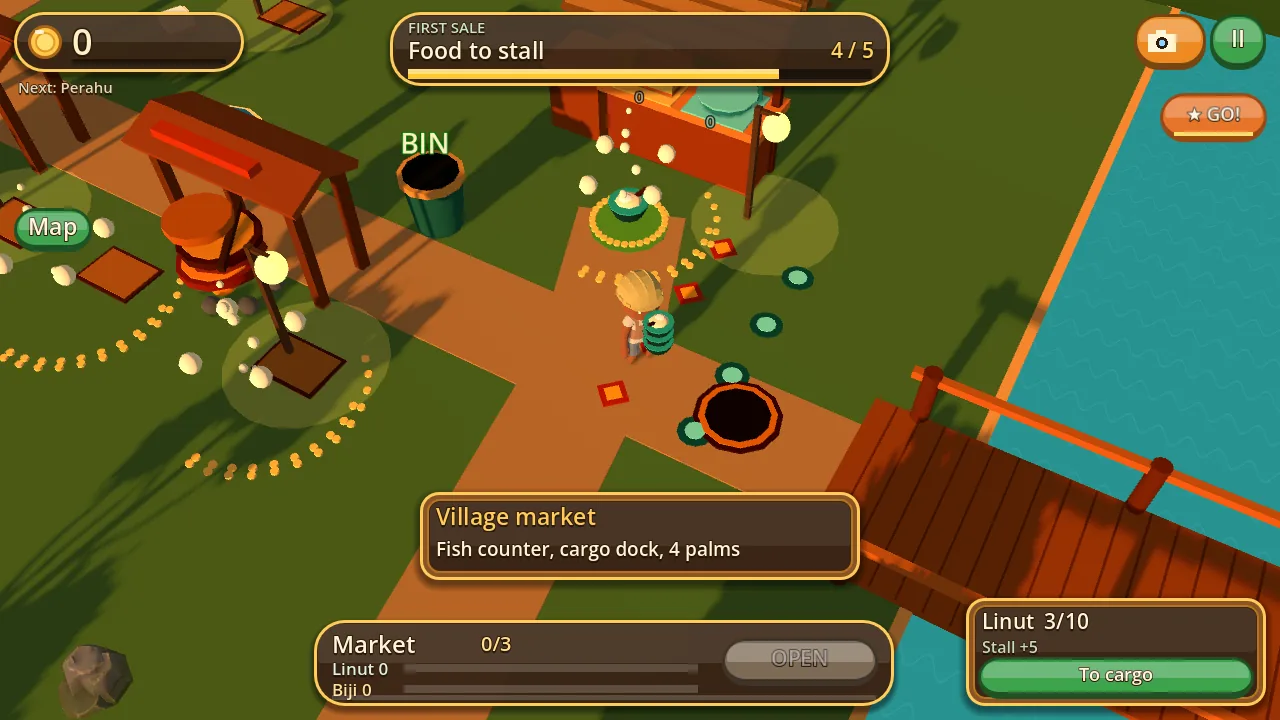
- Grate the logs into starch, cook linut and biji sagu, bake tebaloi, and put the food on the stall counter.
- Carry mixed goods on one stack. Helpers carry too, so the work runs while you do something else.
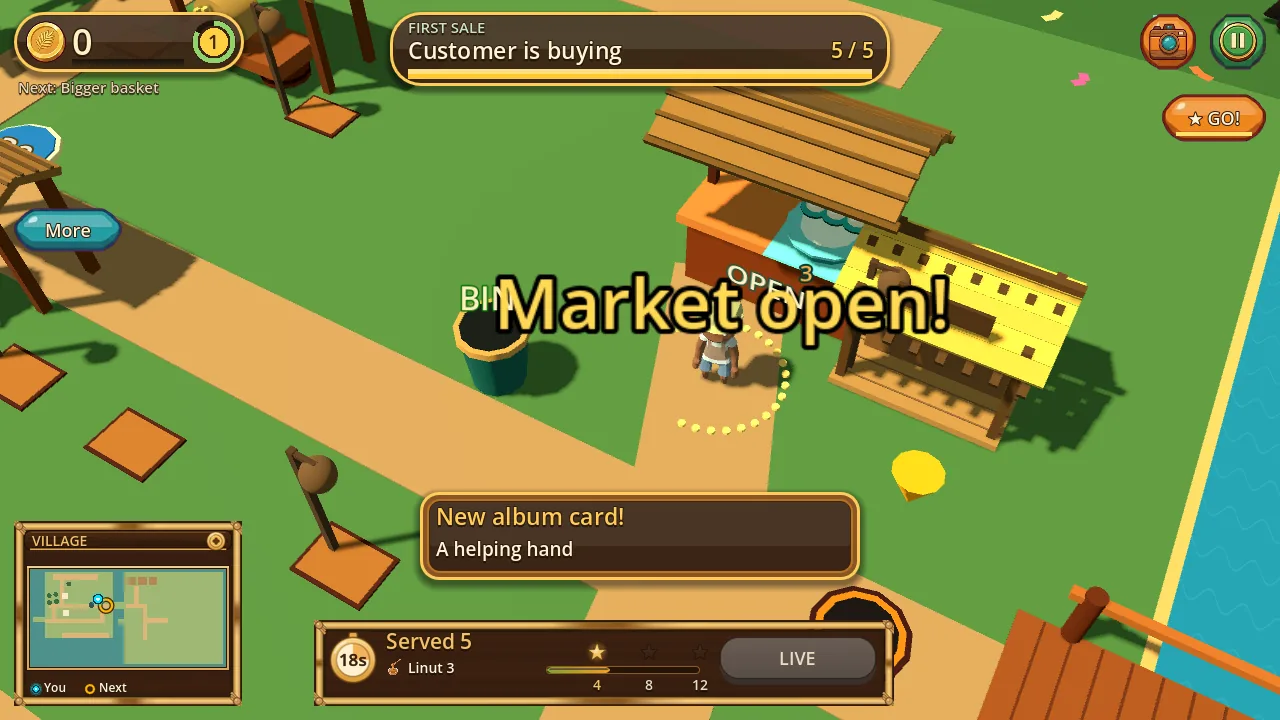
- Press Market Rush for a 25-second bonus round: serve 4, 8 or 12 customers for one, two or three stars.
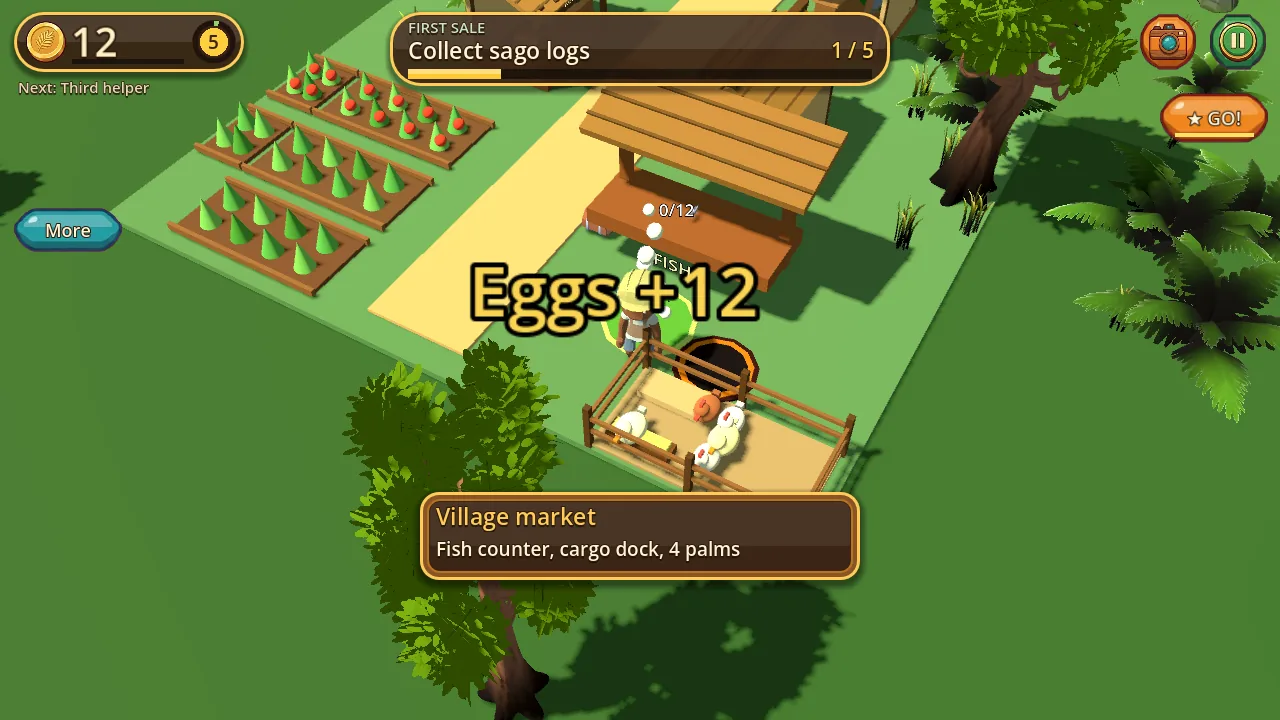
- Keep a small farm with crops, cows and sheep, collect daily gifts, and open new parts of the village stage by stage.
- Use the corner minimap to find your way, and photo mode to make 9:16 postcard pictures.
Screenshots
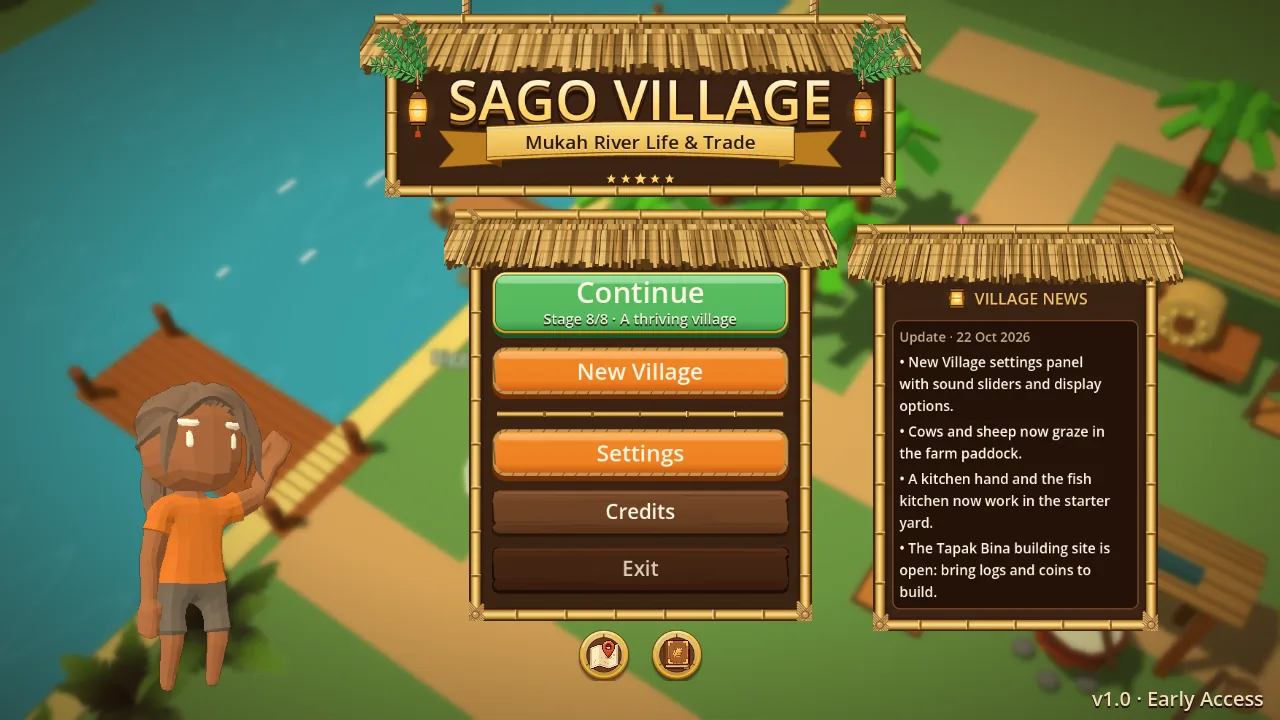
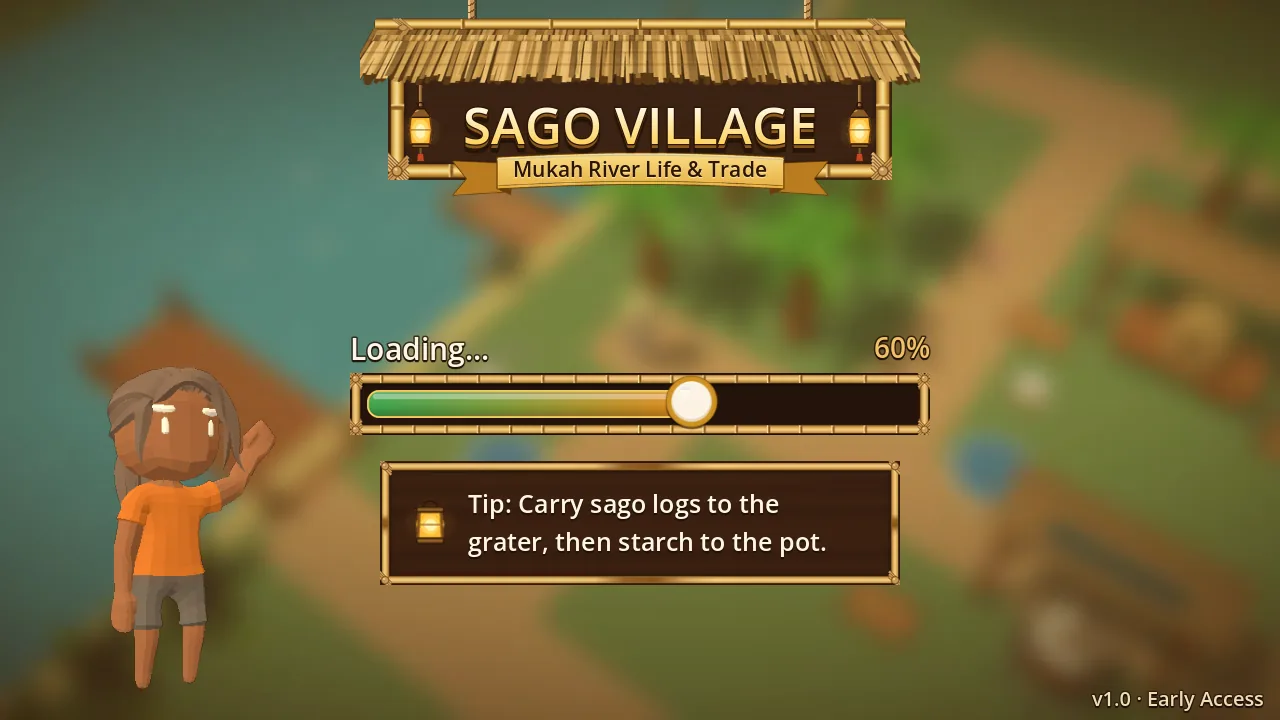
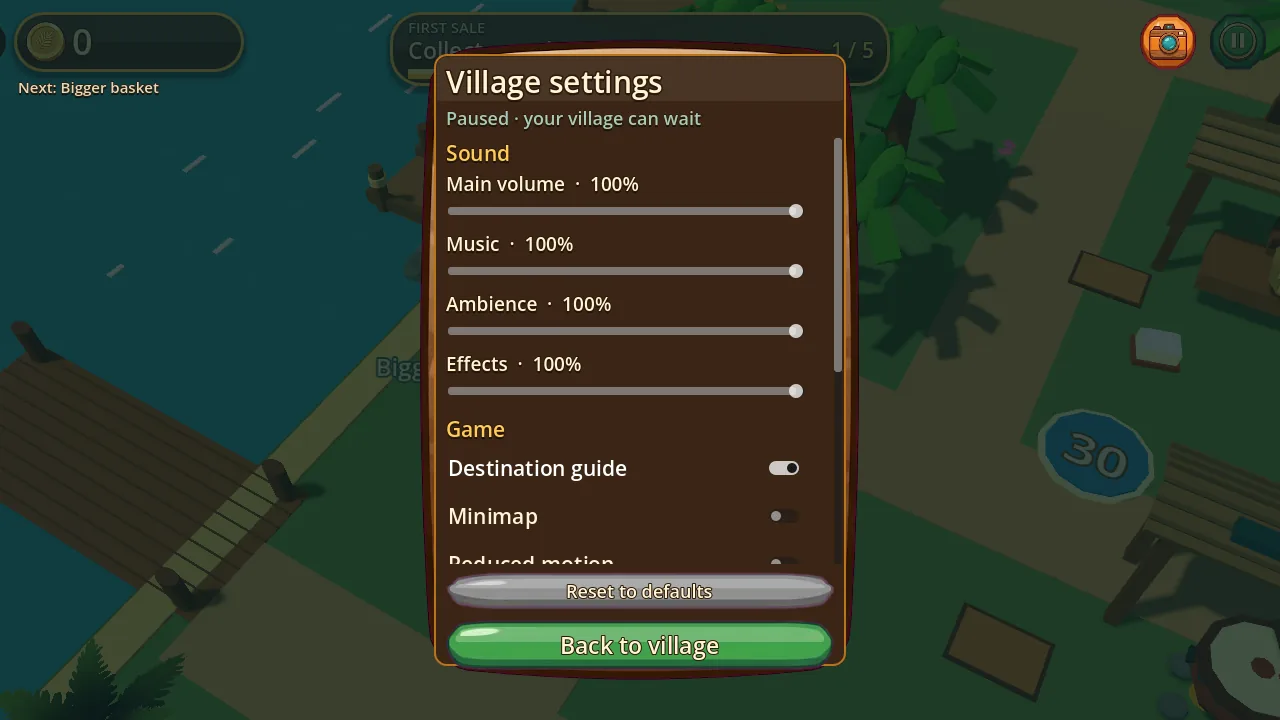
Real captures from the Godot game, 22–23 Oct 2026. The interface text is visible by design.
How it is made
Sago Village is made by one developer, Bryan Rozel. I use AI tools for code help, review and some art, and I say so in the game’s Credits. The 3D models come from CC0 packs by Quaternius and Kenney. Most sounds are CC0 or made for the game; four recordings from freesound.org are credited in the game under their Creative Commons licences.
A note on culture
The setting is a Melanau sago village in Mukah, Sarawak. I am Melanau, and I check the cultural details myself. The game shows everyday village life only: food, work and trade, with no spirits and no rituals.
Development notes
On itch.io
Sago Village went up on itch.io as a Windows download and a browser version. The browser version was silent at first because Godot’s web audio ignored the game’s own sound buses; it now plays through normal stream playback.
A front page, settings and a loading screen
The village now waits behind a front page until you pick Continue or New Village. Settings gained separate main, music, ambience and effects sliders and an Exit menu with a two-click safety. The loading screen shows tips written from the game’s real mechanics, and Market Rush and the minimap got a new look. All 28 check suites pass.
First run on a phone
The web version ran in Chrome on an Android phone. A thumb joystick and bigger on-screen buttons followed.
Mixed stacks, rafts and a photo mode
Logs, starch and food can be carried together. Logs now arrive by raft on the river instead of a cart. Photo mode makes 9:16 postcards for short videos.
Old-style menus and a stage map
Wood-and-gold menus, a title sign, three-star stage clears and a stage map, plus a daily gift, daily jobs and boosters you earn by playing.
A second game begins
Sago Village now runs from chopping a palm to selling at the stall, with helpers, tide canoe orders and a Tebaloi hill.