01 / 06
First Crossing
Read a broken walkway and choose the deck that holds.
Independent game developer
I’m Bryan. I’m building BONEWATER, a first-person game about returning home to a riverside village in Sarawak, one small task at a time.
The reel
Save it: 16:9 MP4, 12.0 MB · 9:16 MP4, 11.4 MB · In development. No release date.
01 / The game
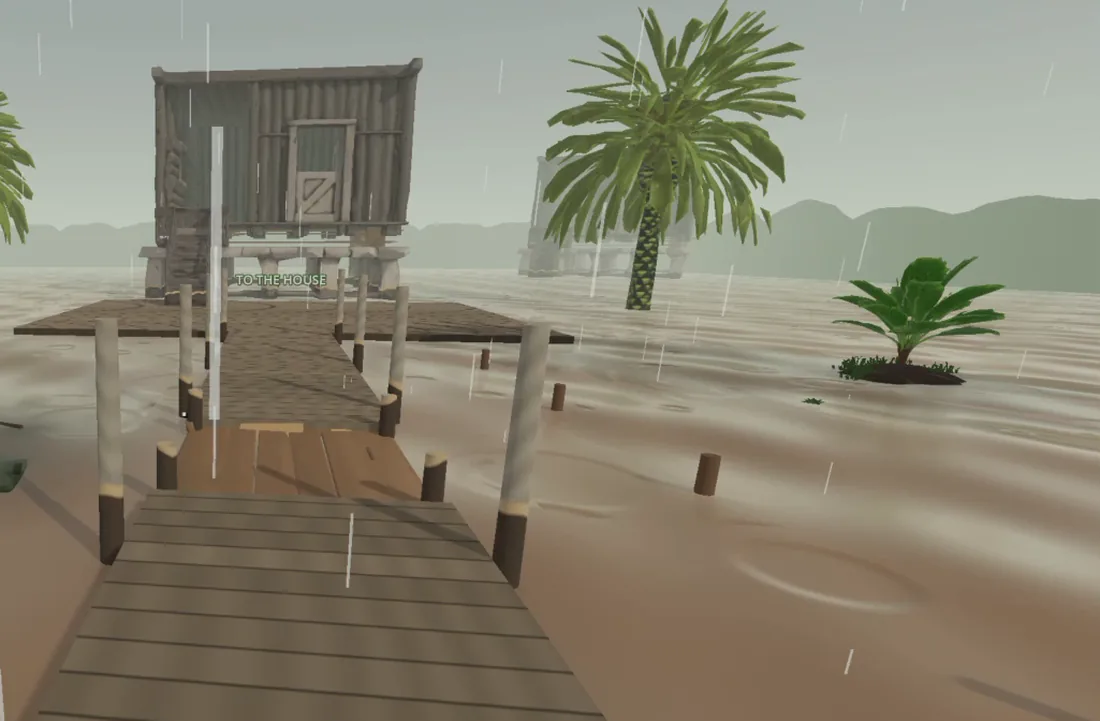
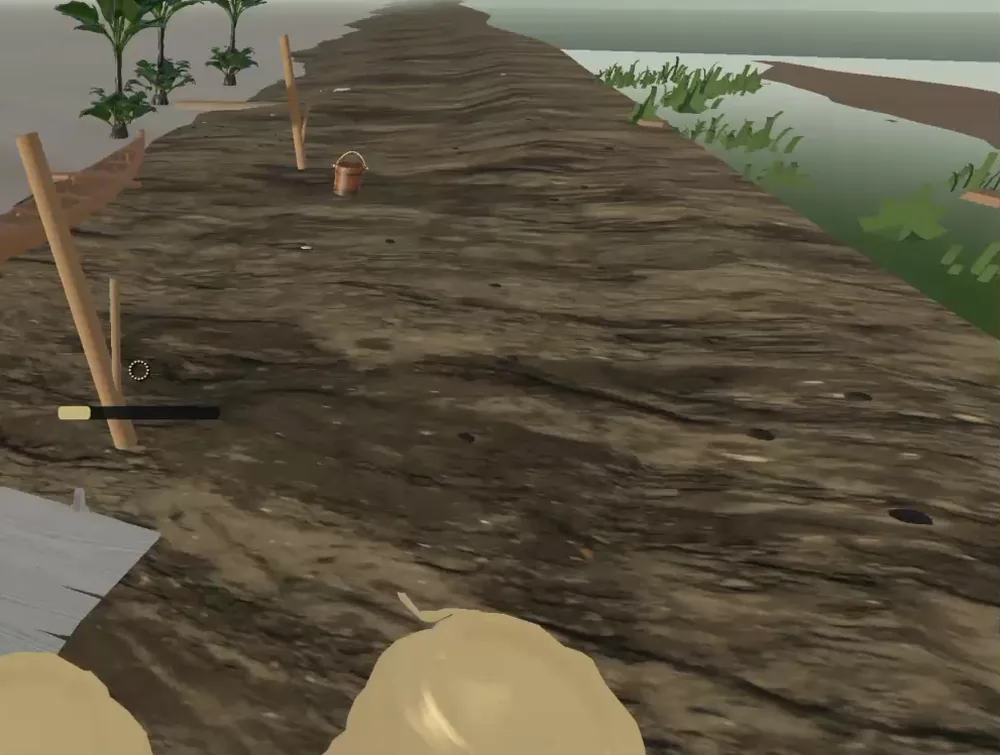
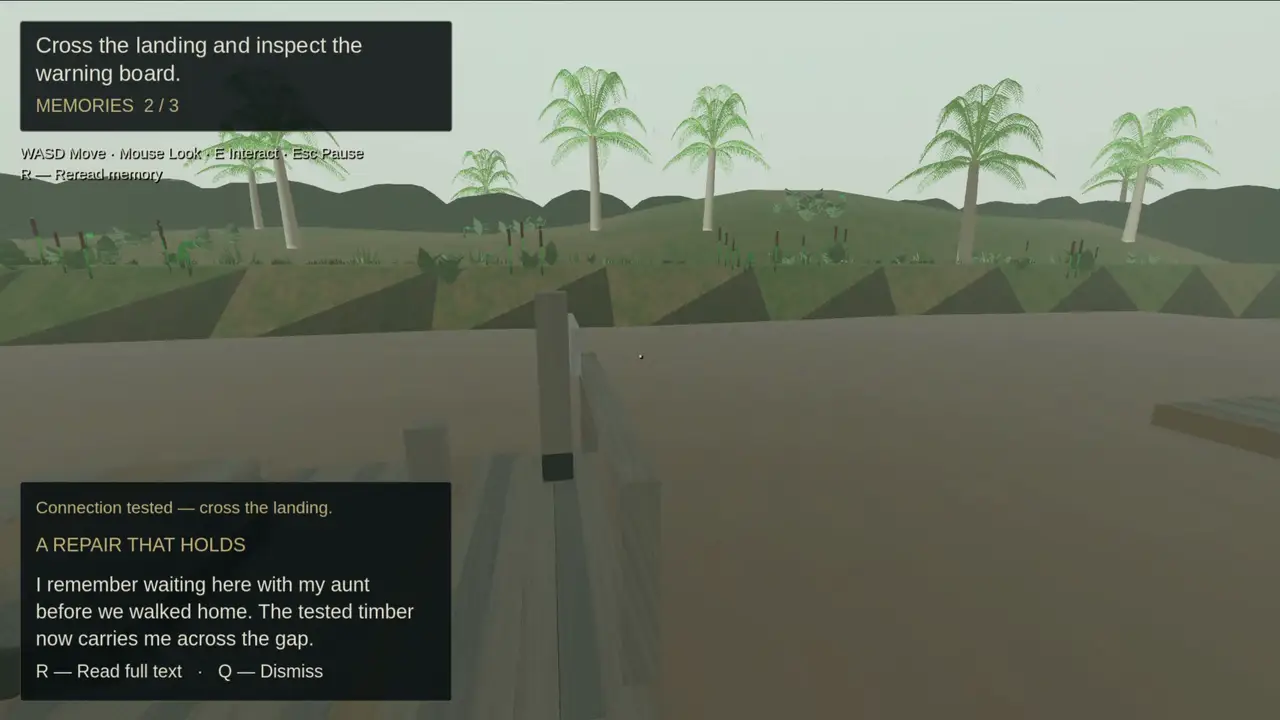
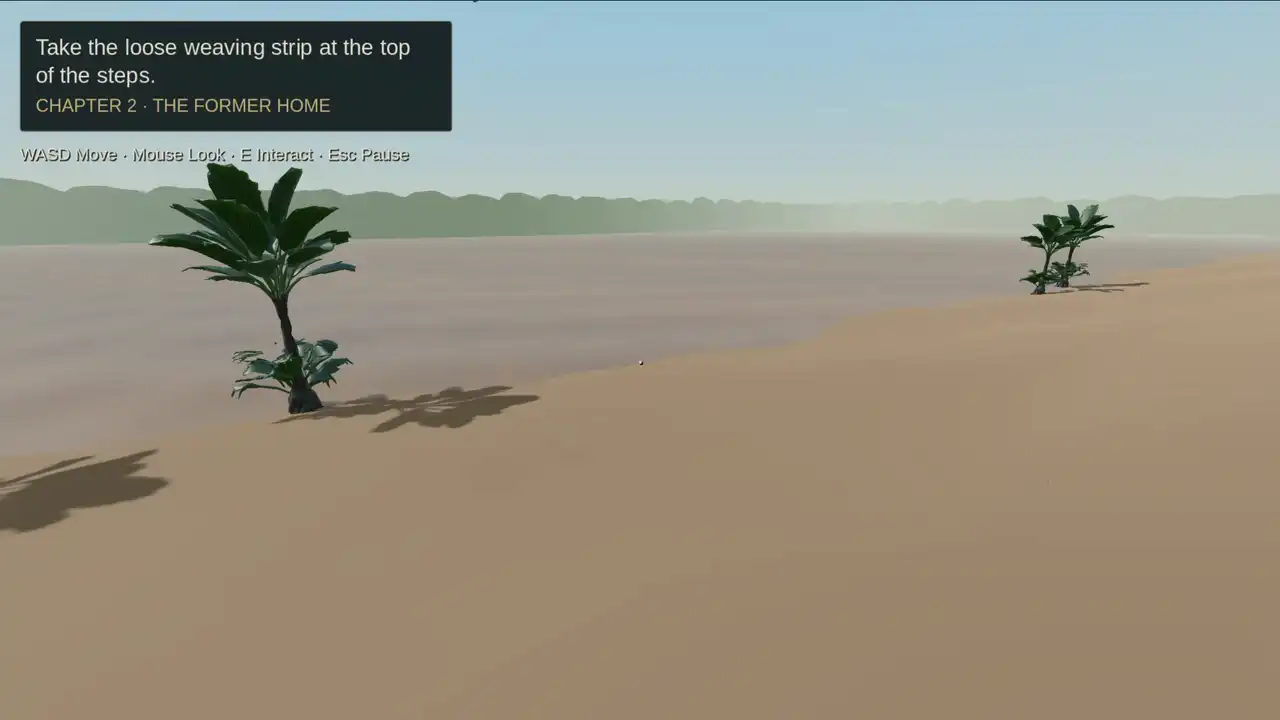
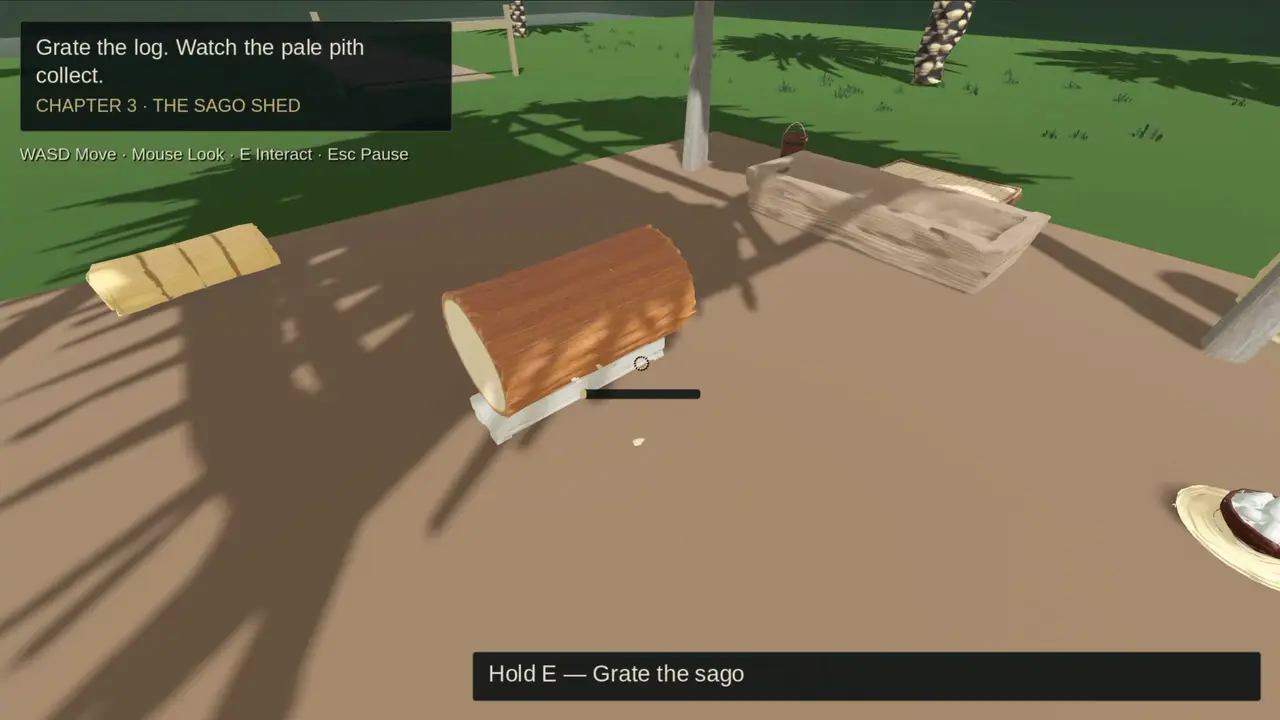
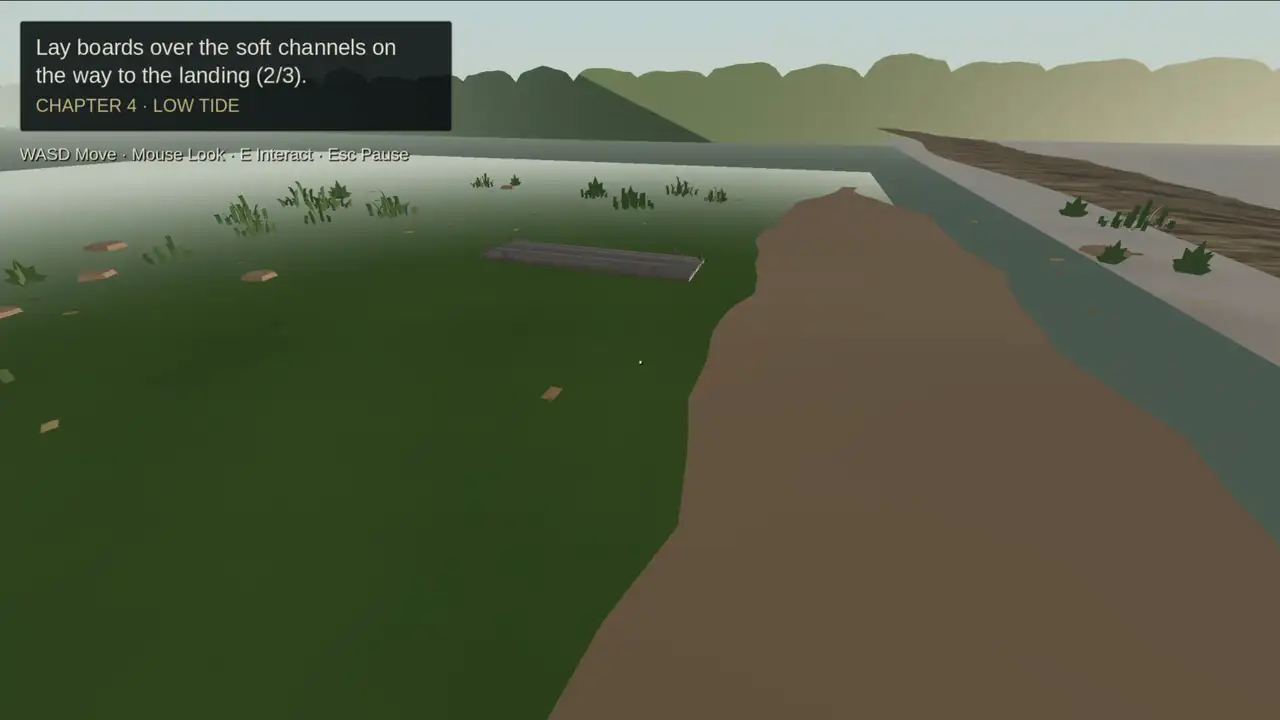
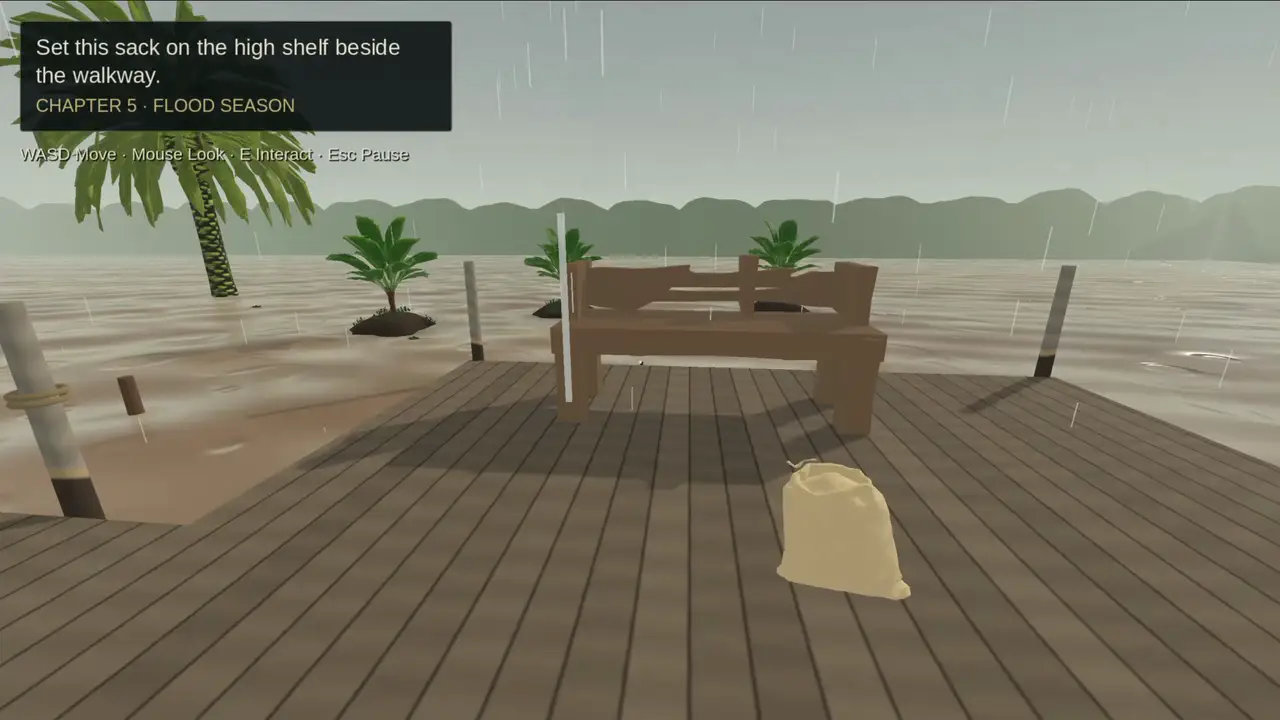
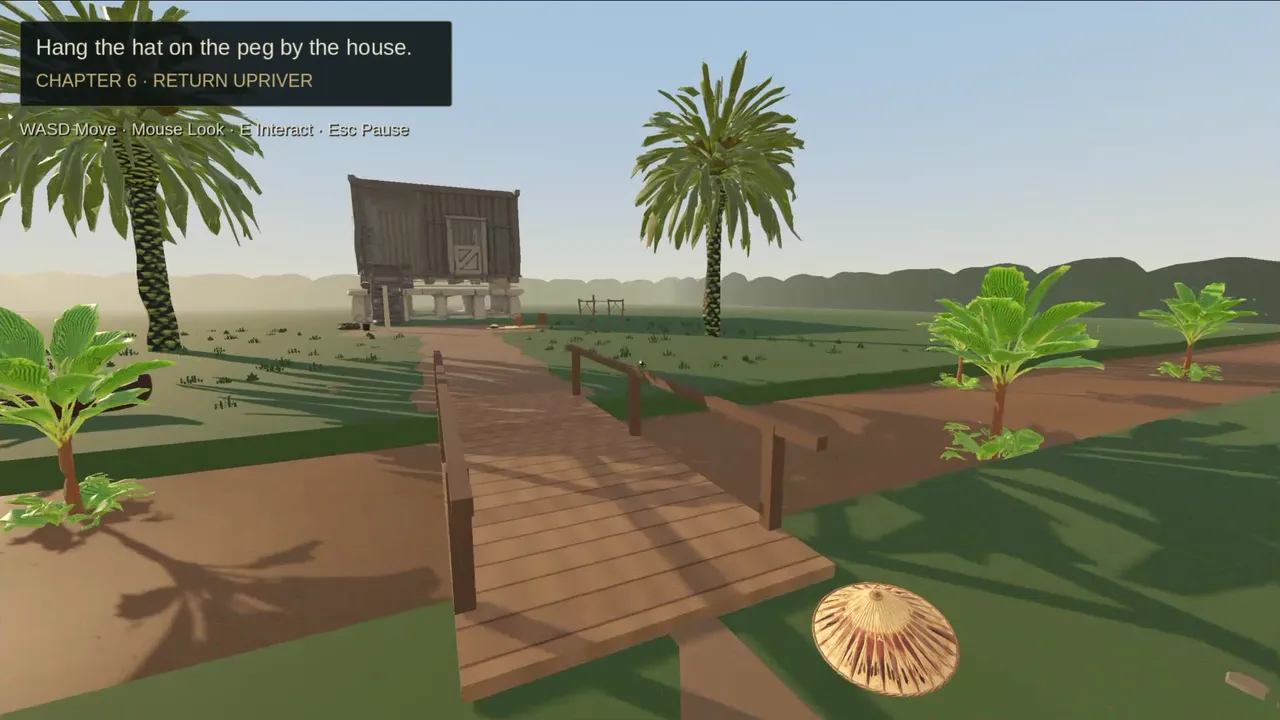
BONEWATER is a calm first-person 3D game in a Melanau-inspired riverside setting in Sarawak. You walk home along raised timber routes, and ordinary tasks change the place around you.
The idea
The journey follows a return toward home. The player works with familiar objects, finds safe crossings and watches everyday actions change the place around them.
Development combines creative direction, iterative gameplay work, environment studies and original field recordings. I work with AI tools and human review; concept artwork and game footage are kept clearly separate.
Current focus: make destinations clear, give actions visible consequences and build depth through varied activities, rather than longer empty walks.
Carry a board, set a trap, lay a plank. Every task is short and the place answers: channels bridged, tides rising, water taking the ground back.
No combat and no failure screens. The game is built from weathered wood, wet ground, brown water, weather and sound, so the player wants to stay and look.
The setting is Melanau-inspired, not a claim of tradition. Cultural details are marked reference-pending until Melanau reviewers have checked them.
02 / Part 1
Each chapter is built around one everyday activity in one place. Pick one, or watch them all.
01First CrossingRead a broken walkway and choose the deck that holds.02The Former HomeFind the loose weaving strip and finish the hat that was left unfinished.03The Sago ShedCarry a log section to the shed and work it, step by step.04Low TideBridge soft channels with boards, set the fish trap, and get the goods up before the water returns.05Flood SeasonLift sacks to the high shelf, pull the boat to its post and lay the plank that holds.06Return UpriverReach the house, hang the hat by the door and choose one thing to keep.Read a broken walkway and choose the deck that holds.
Find the loose weaving strip and finish the hat that was left unfinished.
Carry a log section to the shed and work it, step by step.
Bridge soft channels with boards, set the fish trap, and get the goods up before the water returns.
Lift sacks to the high shelf, pull the boat to its post and lay the plank that holds.
Reach the house, hang the hat by the door and choose one thing to keep.
All clips are captures from the game in development (30 September 2026). Visuals, sound and balance are still changing.
Status
The same facts as above, as a log. Nothing here is a promise.
curl -LO https://makautech.com/downloads/bonewater-press-kit.zip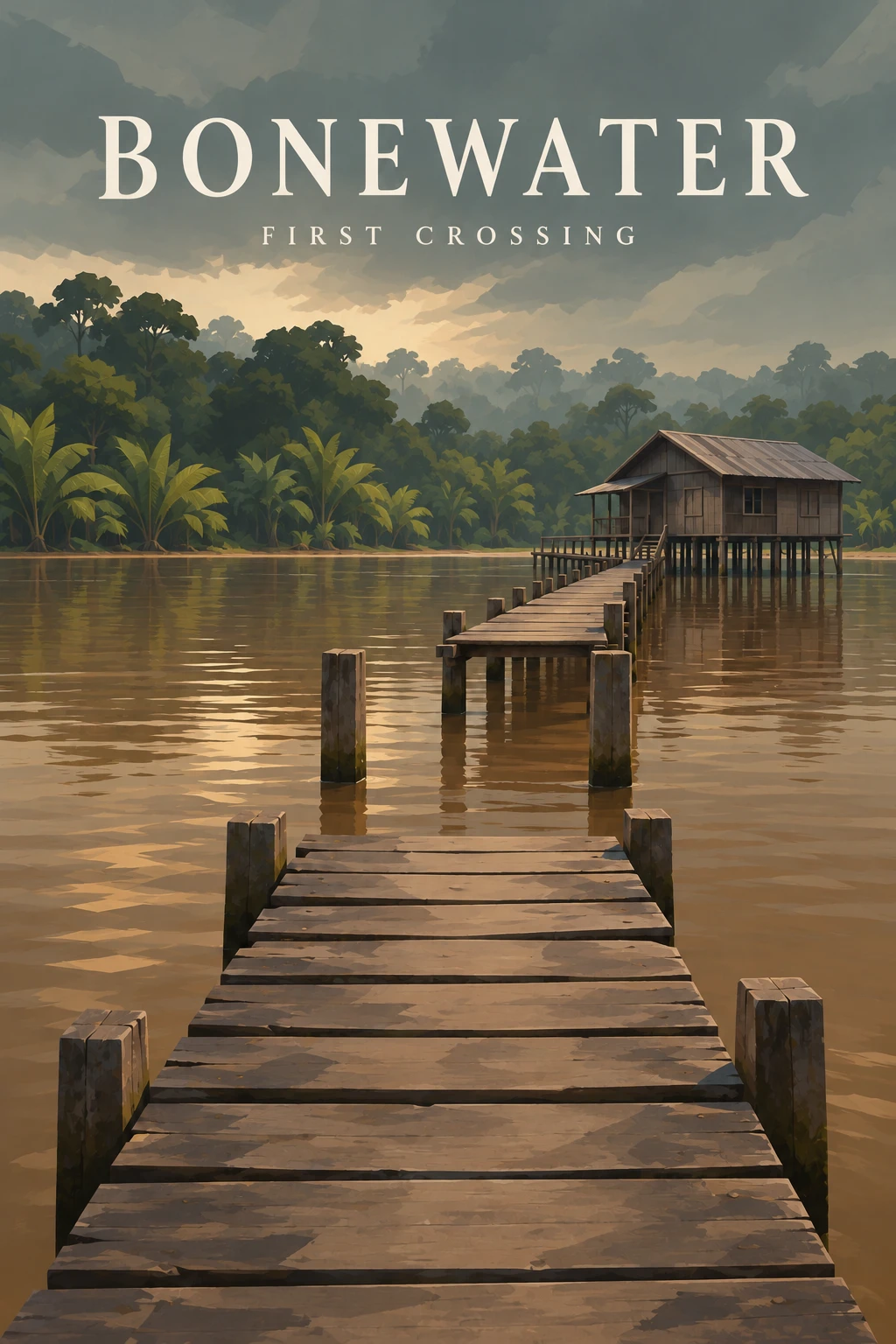
Concept art
This poster was generated with AI from my description of the mood: brown river water, a worn timber jetty, a raised house and heavy light. I use it to talk about the feeling of the game, not to show how the game looks.
03 / Under the hood
Notes from the actual project, as of 11 October 2026.
First-person movement and interaction, carrying and placing, hold-to-act tasks, a rising tide and flood, and a save and load format per chapter that rejects bad data. Old saves keep working as chapters change.
Ground detail, mangrove roots, wet ripple troughs, rain and silt lines are built at runtime from small scripts, so a chapter can be re-dressed without hand-placing thousands of objects.
Water, insects, digging and footsteps on mud and leaves come from my own recordings on a coastal tidal flat. They are in the game now. Low Tide has had a first listening pass in play and one round of tuning; the other chapters are still to be listened to.
1,315
automated checks across 17 headless suites run before changes are accepted, on Godot 4.8-dev7. They prove the wiring works, not how it feels: I judge look and sound myself in recorded playtests.
| Chapter | Place | Core action |
|---|---|---|
| 1 First Crossing | Timber landing | Test the timber, then cross a damaged walkway |
| 2 The Former Home | Raised house and steps | Take the weaving strip and finish the hat |
| 3 The Sago Shed | Open-sided shed | Carry a log and grate it (hold E) |
| 4 Low Tide | Tidal flat | Lay boards over soft channels, set the trap, move the goods before the tide |
| 5 Flood Season | Flooded deck and walkway | Lift sacks, moor the boat, choose the plank that holds |
| 6 Return Upriver | Yard and house | Hang the hat by the door, choose one thing to keep |
From concept to game
Drag to compare
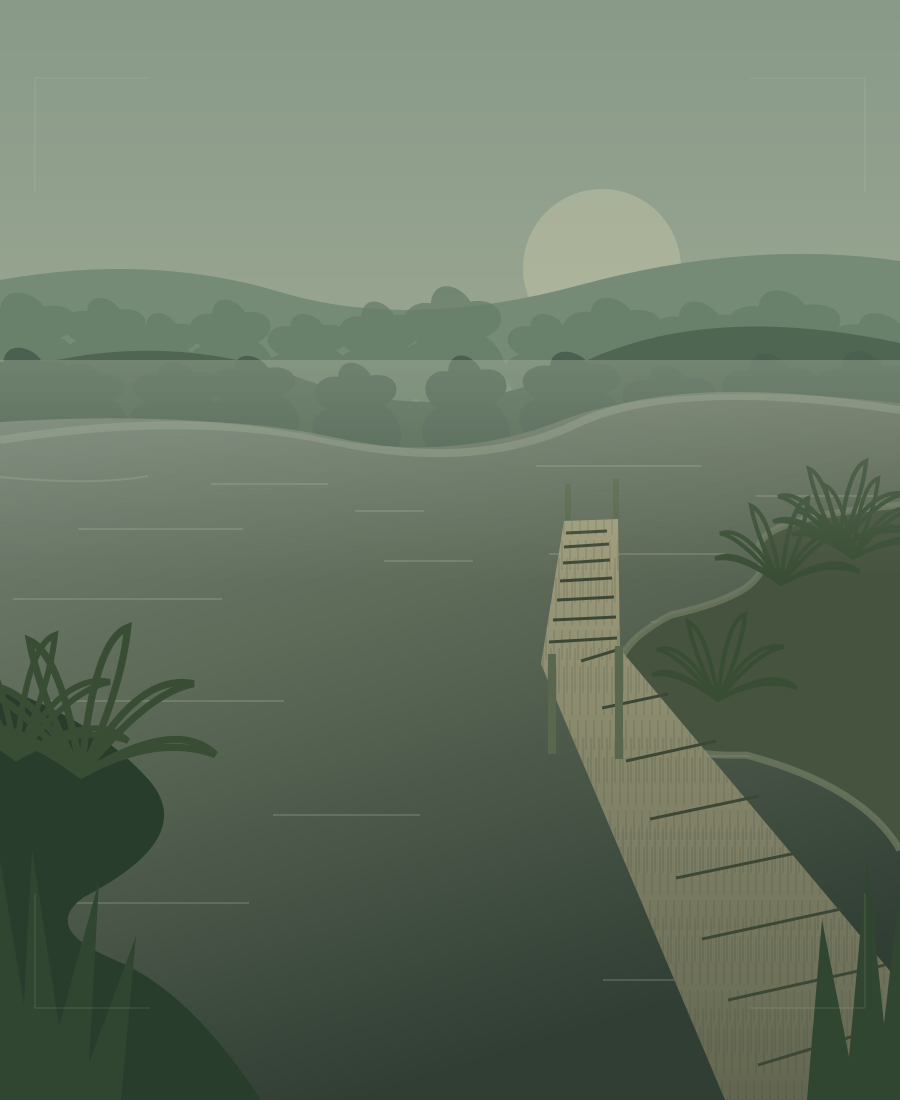 Early concept study · not gameplay
In the game today · real capture
Early concept study · not gameplay
In the game today · real capture
From Low Tide to Flood Season
Drag to compare
Chapter 4 · Low Tide
Chapter 5 · Flood Season
Case study
The Low Tide flat needed to feel like a real place, not a generic stretch of mud.
The recordings are now the game’s water bed, insect chorus and footsteps on mud and leaves. The Low Tide flat has new mangrove roots and wet ripple troughs.
Low Tide has had one listening pass in play and one round of tuning by ear. The other chapters have not. I judge look and sound myself in recorded playtests; the automated checks only prove the wiring works.
Roadmap
Six chapters, from the first crossing to hanging the hat by the door.
Tuning the environment detail and the field-recorded sound, chapter by chapter.
Looking for playtesters and for Melanau readers to review cultural details. Details stay marked reference-pending until then.
Further parts are not announced. There is no release date and no promise beyond Part 1.
Listen
Generated ambience sketch · 20 seconds · loops. Soft water lapping with a few distant insects, made with a script written with AI help. It is not a field recording and it is not the game’s own mix; the game uses my recordings from a coastal tidal flat. Nothing plays by itself.
Download MP3 · 0.3 MBDownload WAV · 3.5 MB
© 2026 Bryan Rozel. All rights reserved. Please do not redistribute without asking.
Development log
A 20-second reel cut from the same 30 September recording, in 16:9 and 9:16. Its music is generated by a script for the reel; it is not the game’s sound, and the end card says so.
The river edge in Low Tide gained mangrove trees and ferns, and the mud flat gained fallen fronds, sticks and a faint wet film. The plant models were made in Blender by an AI assistant from AI concept sheets I wrote the prompts for; the plant choices stay provisional until Melanau readers have checked them. I have looked at it in the editor, not played it through.
Low Tide now has a raised stage at the water’s edge for the goods, two board shortcuts across the mud that go under as the tide rises, a dry walkway that stays open, and short steps up from each shortcut. Built and checked by automated tests; I have not judged how it plays yet.
Development moved fully to Godot 4.8-dev7; the old stable 4.7.2 copy was dropped, so all 17 suites now run on one engine. After watching my own clip of Low Tide I changed it three times: hints come before answers, placing a board, stake, bucket or sack makes a soft sound made by a script rather than recorded, and the boards are carried in one trip. Goods and stakes can be done in either order.
Each chapter ends on a short memory. In Chapters 2 to 5 it used to appear in silence; all six now share the same short cue. Each memory also gained one more personal line. Built and checked by automated tests.
Low Tide had its first listening pass in play. My notes: steps on the boards could not be heard, and mud and digging needed sounds of their own. The mud walk and the dig now come from my own recordings, the boards can be heard, the wind sits lower, and the water grows louder as the tide rises. The post that shows the water marks lost its floating label; the bar at the bottom names the two bands while you look at it.
Development moved to a pre-release build of Godot 4.8. Every automated check passes on it and on stable Godot 4.7.2, which stays as the fallback.
Prototype for Low Tide: two water marks on a post, and two places to set the catch bucket. Set it on the low rest and the game explains that the water will reach it; set it on the raised rest and it stays dry. Nothing fails, and the camera turns to the landing as the tide comes in. It is built and checked by automated tests, but I have not judged it in play yet.
I added a 20-second generated ambience clip, labelled as not a field recording, and an AI concept poster, labelled as not gameplay. The real game footage and my field recordings stay separate from both.
I recorded water, insects and footsteps on a coastal tidal flat. They are now the game’s water bed, insect chorus and walking sounds on mud and leaves. The photos shaped new mangrove roots and wet ripple troughs on the Low Tide flat. Still to be listened to and tuned.
Prototype for Flood Season: two planks float at the gap, one waterlogged. Choose the wrong one and it sags and floats back. Nothing fails; you just try the other.
Chapter 6 rebuilt around the yard, the house and the hat by the door, with a keepsake to choose.
Sources
Everything shown on this page, and how it was made. Real game material and concept material are kept apart.
| On this page | What it is | How it was made |
|---|---|---|
| Gameplay video and six chapter clips | Real game footage No sound. | One screen recording of the game running on my PC, 30 September 2026, cut into clips. |
| The 20-second reel | Real game footage Generated music | Frames from the same 30 September 2026 recording, cut to a beat, with the game’s own on-screen text. The music is made by a script for the reel and is not the game’s sound. |
| Eight screenshots | Real game captures | Six are frames from that recording. Two are separate in-engine captures. |
| Sound in the game | My own field recordings Not played on this page. | Recorded on a coastal tidal flat on 30 September 2026, then processed and looped. |
| Concept study in the first comparison | Concept illustration Not gameplay. | Made with AI tools. |
| Concept poster | Concept art Not gameplay. | Generated with AI from my description of the mood. |
| Sound sketch | Generated ambience Not a field recording. | Made with a script written with AI help. The waveform in the player is measured from the file. |
04 / Behind the work
I’m interested in the way a place can carry a story: through its paths, its sounds and the things people leave behind.
BONEWATER is my ongoing independent game project. I direct it, gather the real-world reference, record the sound and judge every pass by playing it. I build with AI coding assistants, and the table below says where.
One developer and three AI assistants. The assistants are tools I direct: they write, review and sketch, and the decisions stay mine.

Main role
Director, developer and playtester
I set the rules, gather the real-world reference, record the sound, brief the assistants and play every pass. Nothing stays in the game until I have judged it.

AI assistant
Code writer
Writes game code in turns and reviews the other assistants’ turns. Its work is tested, and I play it before it stays.

AI assistant
Code writer and reviewer
Writes code in alternate turns and reviews the rest read-only, saying what is wrong before I decide. It also helps build this website.

AI assistant
Concept images and second opinions
Makes mood studies and reference images and gives observations. Reference only: it never makes design decisions.
The four illustrations are AI-made characters, not photographs. The assistants are tools, not team members.
| Part of the work | Who | An example from BONEWATER |
|---|---|---|
| Creative direction | Mine | The rules: no combat, no fail screens, short everyday tasks. A wrong plank sags and floats back, and you try the other. |
| Field recording | Mine | Water, insects, digging and footsteps recorded on a coastal tidal flat on 30 September 2026. They are the game’s water bed and walking sounds. Low Tide has had its first listening pass in play; the other chapters are next. |
| Place study | My photos AI-assisted code | My photographs of mangrove roots and wet ripple troughs shaped the Low Tide flat. The scripts that build them in the engine were written with AI help. |
| Gameplay code (GDScript) | With AI coding assistants | The tide, the plank choice and the save format are written with AI assistants from my briefs. I play each pass, send it back when it is wrong, and decide what stays. |
| Testing and judgement | Mine | 1,315 automated checks prove the wiring works. I judge how it looks and sounds in recorded playtests. |
| Concept art | AI-generated | The poster and the early river study are mood studies made with AI tools, and always marked as not gameplay. |
Questions
Not publicly yet. Part 1 plays from start to finish on my PC, but no release date is announced. If you would like to playtest, use the contact form below.
It is Melanau-inspired, not a claim of tradition. Cultural details stay marked reference-pending until Melanau readers have checked them, and I am looking for readers to help.
Yes. The chapter clips, and the screenshots taken from them, are from one recording of the game made on 30 September 2026. Two more screenshots are separate in-engine captures. Concept art is always labelled and kept apart.
Yes, for code help, review, early concept art and the script behind the sound sketch. I make the design decisions and test in the engine. The field recordings in the game are my own.
The press kit has the facts, screenshots and a ZIP download. For anything else, message me.
It is saved privately and emailed to me so I can reply. It is not used for marketing. The privacy notice has the details.
05 / A conversation starts here
Playtesting, a cultural review, writing about the game or making something together: tell me what you have in mind.
Paid services are not offered yet. An enquiry is not a booking or a commitment.
Your message is saved privately and emailed to Bryan so he can reply. It is not used for marketing.